
Strength Training for Seniors: Good, Better, Best Exercises

Good: Walking. Better: Outdoor biking. Best: Progressive strength training. Choose exercises that develop the abilities you want to keep.
Strength Training for Seniors: Good, Better, Best Exercises After 70
What are the best exercises for seniors who want to stay strong, active, and independent?

My response to a discussion about weight training for seniors in Reddit’s r/SeniorFitness community. **Click the image to read the original discussion and join the conversation!**
A recent discussion about weight training for seniors in the r/SeniorFitness Reddit community inspired me to share my Good, Better, Best exercise selection philosophy.
Weight training for seniors
The conversation explored weight lifting for seniors, cardiovascular activity, and what motivates people over 70 to keep exercising.
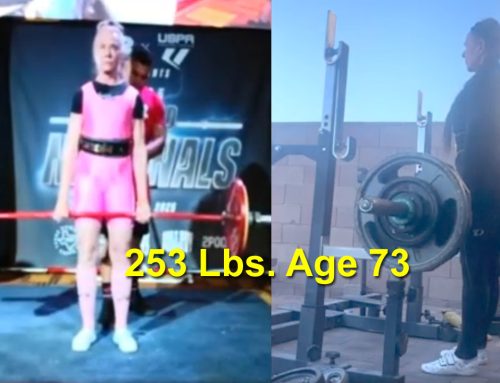
As a 73-year-old competitive powerlifter and longtime fitness professional, I approach exercise selection differently from someone simply looking for ways to stay active.
My philosophy is Good, Better, Best.
Almost any appropriate physical activity is better than inactivity. But not all exercise delivers the same return on the time, energy, and effort invested.
I prefer to reserve my training capacity for activities that develop and preserve the physical abilities I value most: muscular strength, cardiovascular endurance, mobility, and independence.
That means prioritizing progressive weight training and outdoor biking rather than spending my available exercise time swimming or accumulating walking mileage.
Here’s why.
GOOD: Walking Is Beneficial, but Has Limitations
Walking Is Accessible and Sustainable
Walking is one of the most accessible forms of exercise for older adults.
It requires little equipment, can be performed almost anywhere, and provides opportunities for regular movement and social engagement.
Walking is generally a low-effort, potentially high-volume activity. Accumulating steps throughout the day can improve overall activity levels and contribute to cardiovascular health.
For previously sedentary individuals, walking may produce meaningful initial improvements in fitness.
Why Walking Alone Doesn’t Build Substantial Strength
Although walking provides valuable daily movement, it cannot replace progressive resistance exercise for building strength. I explain this distinction in greater detail in my article, Walking Is Not Strength Training: 7 Hard Truths.
The body adapts to repeated demands.
Once walking becomes routine, simply accumulating more mileage may offer diminishing returns in muscular strength, although increasing duration or pace can still improve cardiovascular conditioning.
Weighted Vests: More Conditioning Than Strength Development
Walking on level ground generally provides insufficient resistance to produce substantial strength gains in individuals who have already adapted to the activity.
Adding a weighted vest increases the physical demands of walking, potentially improving cardiovascular conditioning, muscular endurance, and weight-bearing stimulus.
Walking is good exercise, but it is not a substitute for progressive strength training.
However, these conditioning benefits should not be confused with substantial gains in maximal muscular strength.
Progressive resistance training allows loads to be systematically increased, providing the mechanical stimulus necessary to develop greater muscular strength and power.
BETTER: Outdoor Biking Provides Greater Training Challenges
Outdoor biking is my preferred cardiovascular activity.
Unlike walking at a relatively consistent pace, biking allows me to vary resistance, intensity, terrain, and duration.
Hills challenge lower-body muscular endurance. Changing terrain requires coordination, balance, and attention. Sustained riding develops cardiovascular conditioning.
Biking also offers the pleasure of being outdoors while providing opportunities to progressively challenge physical performance.
For me, outdoor biking delivers a valuable combination of endurance, muscular effort, and functional skills. However, it is stil a non-weight bearing activity.
Swimming is non-weight bearing
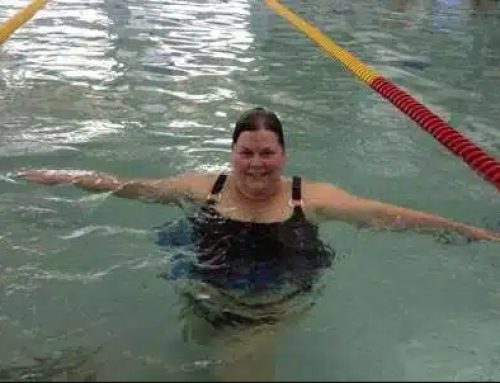
Swimming certainly has benefits, particularly for individuals who need low-impact exercise. However, it does not provide the same weight-bearing stimulus as land-based activities.
I choose to invest my available training time in activities that most closely support my personal fitness objectives.
Outdoor biking complements my barbell training without replacing the specific benefits of progressive resistance exercise.
BEST: Progressive Strength Training for Seniors
When it comes to maintaining and improving muscular strength, progressive resistance training deserves priority.
Age-related losses in muscle mass and strength can gradually compromise the ability to perform ordinary activities.
Rising from a chair, climbing stairs, carrying groceries, lifting luggage, and recovering balance all depend on physical capabilities that can decline without sufficient muscular challenge.
Strength training provides the stimulus needed to maintain and improve these abilities.
The benefits of strength training for seniors include:
- Maintaining and improving muscular strength.
- Preserving muscle mass during aging and weight loss.
- Supporting bone health through appropriate resistance and weight-bearing exercise.
- Improving the ability to perform everyday physical tasks.
- Developing neuromuscular coordination and movement efficiency.
- Supporting balance, mobility, and physical independence.
- Building confidence in one’s physical capabilities.
These benefits are not reserved for lifelong athletes.
Older adults who have never lifted weights can begin with appropriate instruction, manageable resistance, and progressive training.
The important distinction is that strength training must provide a sufficient challenge to encourage adaptation.
Simply repeating comfortable movements indefinitely is not the same as progressive resistance training.
Strength Training Over 70: Discovering Strength You Already Have
One of the most rewarding aspects of coaching older adults is demonstrating how much strength they may already possess.
I frequently introduce clients to resistance training who have little or no experience with barbells.
Their early improvements can be surprisingly rapid.
Some of this initial progress comes from improved coordination, technique, confidence, and recruitment of existing muscular capacity.
Popularly described as newbie gains, these early improvements do not necessarily represent newly developed muscle mass.
Instead, previously untapped strength becomes accessible through proper activation, progressive loading, and appropriate recovery intervals.
This is an important distinction.
Older adults should not automatically assume that their current performance represents the limits of their physical capabilities.
Often, they simply have not been taught how to use the strength already available.
That discovery can transform their perception of aging.
The Best Exercises for Seniors Depend on the Desired Results

Strength Training Over 70 – Joe Age 78 Farmer Walking
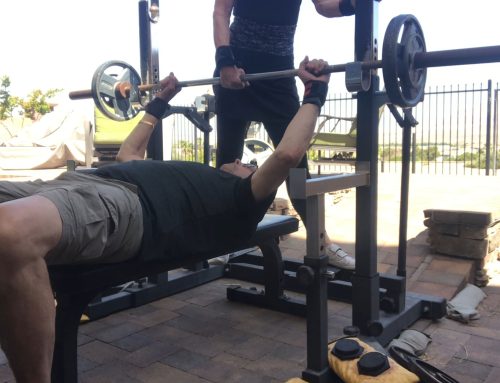
BEST: Progressive Strength Training — At 78, Joe discovers previously untapped strength through proper technique, neuromuscular activation, and progressive resistance training. Proof that strength training after 70 isn’t just about building new muscle—it’s also about learning to use the strength you already have.
Not everyone needs to become a competitive powerlifter.
However, almost everyone benefits from developing the strength necessary to manage everyday physical demands.
My approach emphasizes compound resistance exercises that recruit multiple muscle groups and develop practical movement skills.
Squats and appropriate variations help develop lower-body strength.
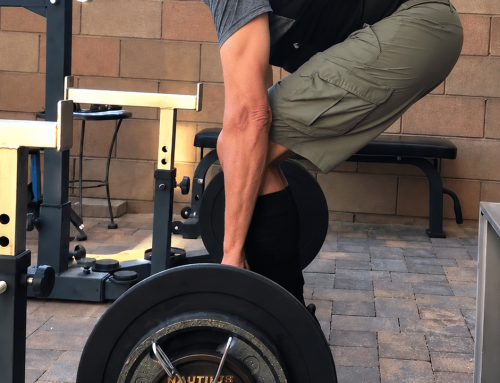
Deadlifts and hip-hinge movements develop the ability to lift objects from the ground.
Pressing and pulling movements strengthen the upper body.
These exercises can be modified to accommodate individual differences in mobility, training experience, orthopedic history, and physical capacity.
A beginner might start with a lightweight training bar or modified movement pattern before progressing to more demanding resistance.
The objective is not to demonstrate how much weight someone can lift on the first day.
It is to establish a foundation for continued progress.
The best exercise is one that delivers a meaningful training benefit while remaining appropriate for the individual performing it.
Why I Don’t Measure Exercise Success by Calorie Burn
Many fitness programs emphasize exercise duration, step counts, and calorie expenditure.
Those measurements can be useful, particularly for increasing general activity or managing energy balance.
But they do not tell the whole story.
For older adults, body composition, muscular strength, and functional capacity may be more meaningful indicators of progress than the number on the bathroom scale.
Someone can lose weight without becoming stronger.
Likewise, someone can become considerably stronger while experiencing relatively modest changes in body weight.
In my residential fitness retreat programs, I emphasize preserving and developing strength while improving body composition.
Progressive resistance training becomes especially valuable during weight loss because it helps preserve lean muscle mass when combined with adequate nutrition.
The goal is not simply to weigh less.
It is to become stronger, more capable, and better conditioned.
Good, Better, Best Is About Exercise Priority, Not Exercise Elimination
I am not suggesting that older adults abandon walking, swimming, yoga, or other enjoyable activities.
Each has benefits.
The question is whether those activities are delivering the physical adaptations an individual needs most.
Someone recovering from illness may find that walking represents an appropriate and meaningful challenge.
Someone with significant joint limitations may benefit from aquatic exercise.
Someone seeking cardiovascular endurance may enjoy biking, hiking, or other sustained activities.
But if the objective is to improve muscular strength, progressive resistance training provides a more direct and effective stimulus than activities that do not sufficiently challenge the muscles.
This is why I distinguish between being physically active and deliberately training for improved physical performance.
Activity maintains movement. Training develops specific abilities.
A well-designed program can incorporate both.
Join the Conversation: Powerlifting Over 70
The Reddit discussion that inspired this article reminded me how valuable it is for older adults to exchange experiences about training, aging, and physical performance.
I created r/powerliftingover70 as a community for discussing strength training, barbell exercise, and the possibilities of continued physical development later in life.
You don’t need to be a competitive powerlifter to participate.
Whether you’re curious about beginning resistance training, returning to weights after years away, or already lifting regularly, you’re welcome to explore the discussions and contribute your experiences.
I share training observations, videos, and examples of older adults discovering and developing their strength.
Visit r/powerliftingover70 and join the conversation.
The Bottom Line: Train for the Abilities You Want to Keep
At 73, I continue to train with barbells, ride outdoors, and challenge my physical abilities because I value what those activities allow me to do.
My priorities are not based on accumulating the greatest number of exercise minutes.
They are based on choosing activities that provide meaningful physical returns.
Walking is good.
Outdoor biking provides additional opportunities for cardiovascular conditioning and muscular endurance.
Progressive strength training is essential when the objective is to develop and preserve muscular strength.
The ideal combination will vary according to individual goals and limitations, but the underlying principle remains the same.
Don’t simply exercise to stay busy. Train for the abilities you want to keep.
Frequently Asked Questions About Strength Training for Seniors
Is strength training for seniors over 70 safe?
Yes. Properly designed strength training can be safe and beneficial for adults over 70. The key is selecting appropriate exercises, beginning with manageable resistance, and progressing according to individual capabilities. Existing medical or orthopedic conditions may require modifications or medical guidance.
How often should you do strength training over 70?
Most older adults can benefit from strength training at least twice weekly, with adequate recovery between challenging sessions. Training frequency depends on experience, exercise intensity, physical condition, and individual recovery needs.
Is Walking Beneficial for Seniors Doing Weight Training Over 70?
Walking provides valuable cardiovascular activity and daily movement, but it generally does not supply sufficient resistance to maintain or improve whole-body muscular strength. Combining walking with progressive resistance training provides a more comprehensive approach to fitness.
For a closer examination, read Walking Is Not Strength Training: 7 Hard Truths.
Can Strength Training Exercises for Older Adults Build Muscle After Age 70?
Absolutely. Older adults retain the ability to improve muscular strength through appropriately structured resistance training. Early improvements often reflect better coordination, technique, and recruitment of existing muscular capacity, followed by further adaptations as training progresses.
Can the Best Exercises for Seniors Help Maintain Independence?
There is no single exercise that develops every physical ability. However, progressive strength training deserves particular attention because muscular strength supports everyday activities such as rising from chairs, climbing stairs, carrying objects, and maintaining physical independence.
Walking and outdoor biking can complement resistance training by providing additional cardiovascular and endurance benefits.
About Debra Stefan
Debra Stefan is a 73-year-old competitive Masters powerlifter, certified personal trainer since 1996, and strength coach with decades of experience in exercise instruction and physical conditioning.
She specializes in personalized strength training, fitness, and weight-loss programs for adults, including individuals beginning resistance training later in life.
Her private residential Vegas Fitness Retreats provides individualized coaching, progressive resistance training, outdoor biking, and practical lifestyle instruction.
Explore additional resources:

Leave A Comment
You must be logged in to post a comment.