
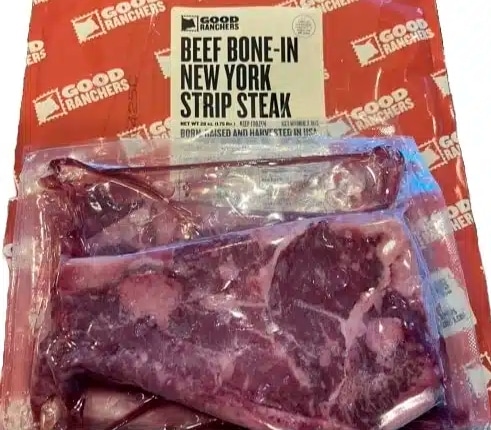
Your New Relationship With Food Begins at the Grocery Store

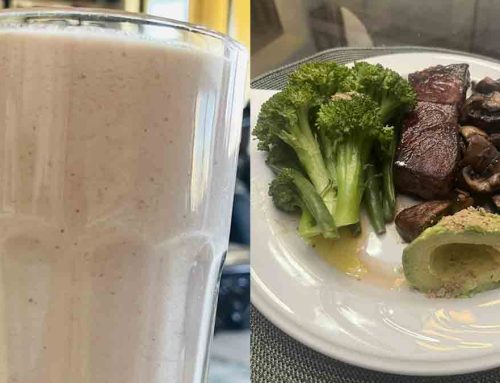
Protein shakes for weight loss can supplement a balanced diet
A high protein diet for weight loss begins with understanding the food you’re putting into your grocery cart. Most people have been grocery shopping their entire adult lives. But that doesn’t necessarily mean they have ever been taught healthy grocery shopping with an understanding of nutrition.
That’s why an educational grocery store tour is an important part of my weight-loss retreat.
This isn’t about following me around the store while I tell you what you are and aren’t allowed to buy. It’s about developing a new awareness of food—what whole foods are, what macronutrients do, where protein comes from, why dietary fat isn’t the enemy, and how seemingly small choices can make an enormous difference when you’re trying to lose body fat while preserving muscle.
The goal isn’t simply to lose weight while you’re here.
It’s to change your relationship with food so that you understand how to feed yourself when you go home.
Start With Whole Foods for Weight Loss
One of the first things I teach is how to choose whole foods for weight loss while still eating satisfying, enjoyable meals. It starts with something surprisingly simple: learning to recognize food in its most natural form.
Meat, poultry, fish, eggs, vegetables, fruit, potatoes, yams, beans and other minimally processed foods make it much easier to understand what you’re actually eating.
That doesn’t mean every packaged food is bad. It means that when the majority of your diet consists of recognizable whole foods, nutrition becomes much easier to understand and manage.
Eating a whole foods diet
A whole foods diet shifts attention away from marketing claims on the front of a package—“low fat,” “natural,” “high protein,” “keto,” or “healthy”—and toward what the food actually provides.
During the grocery store tour, I want you to begin looking at food differently.
Instead of asking, Is this allowed?, start asking:
What does this food contribute to my meal?
Understanding Your Macros for Weight Loss
Protein, carbohydrates and fat are the three macronutrients, commonly called “macros.”
All three have a place in human nutrition.
Yet many people arrive with years of diet rules in their heads: carbohydrates make you fat, fat makes you fat, skip breakfast, don’t eat after a certain hour, eat tiny portions, or simply eat less.
I would rather teach you what you’re eating.
Carbohydrates provide energy. Dietary fats perform essential functions in the body and make food satisfying. Protein supplies the amino acids required to build and maintain body tissues—including the muscle I very much want you to preserve while losing weight.
Once you understand macros for weight loss, the objective stops being deprivation and becomes making better choices with the food you’re eating.
Why I Emphasize a High Protein Diet for Weight Loss
When someone tells me they’re trying to lose weight, I’m not interested only in how many pounds disappear from the scale.
What are you losing?
Losing body fat while preserving as much lean tissue as possible is very different from simply making your body smaller.
That’s one reason a high protein diet for weight loss plays such an important role in my approach. Adequate protein supports muscle retention, particularly when combined with the resistance training that is central to my retreat.
And this becomes extremely practical in the grocery store.
I teach you to identify the protein first.
Where are the high protein foods? How much protein does a serving actually contain? How much would you need to eat to get a meaningful amount?
Soon, you’re no longer vaguely trying to “eat more protein.” You know what protein looks like on your plate.
Animal Protein vs. Plant Protein: Choosing Protein Rich Foods
Plant foods can absolutely contribute protein. But all protein sources aren’t nutritionally identical.
Animal-based protein rich foods such as eggs, poultry, fish and lean meats generally provide all nine essential amino acids in highly digestible forms. They also make it relatively easy to obtain substantial amounts of high-quality protein without consuming enormous portions of food.
Plant protein can be part of a nutritious diet, but depending on the source, it may provide less of particular essential amino acids, be less digestible, or require larger quantities and more deliberate food choices to meet protein needs.
For someone actively losing weight, that distinction matters because calories aren’t unlimited.
This is why I emphasize high-quality animal protein and also use whey protein strategically. Whey is a complete, highly digestible protein and makes increasing daily protein remarkably simple when convenience, appetite or calorie limits make another full meal impractical.
When you learn to recognize foods that have high protein, meeting your daily protein needs becomes much less complicated.
It’s Time to Stop Being Afraid of Fat
Many adults lived through the low-fat era.
Fat was stripped from foods and frequently replaced with sugars and starches, while consumers learned to associate the word “fat” on a nutrition label with becoming fat themselves.
Dietary fat doesn’t work that way.
Fat is an essential macronutrient. The body needs it.
What does matter during weight loss is quantity. Fat contains more than twice as many calories per gram as protein or carbohydrate, so a relatively small portion can contain considerable energy.
The lesson, therefore, isn’t avoid fat.
It’s understand fat.
An egg yolk isn’t something to fear. Neither is the naturally occurring fat in salmon or other whole foods. At the same time, pouring oil freely over a meal because olive oil is “healthy” can add hundreds of calories without someone realizing it.
That’s precisely the kind of awareness I want the healthy grocery shopping tour to create.
Why No Bread or Conventional Dairy During My Weight-Loss Retreat?
I don’t eliminate bread and conventional dairy because I believe either one automatically makes people fat.
I remove them because simplification works during an intensive period of weight loss and nutrition education.
Bread is extraordinarily easy to eat and frequently becomes the vehicle for additional calorie-dense foods—cheese, spreads, sauces and oversized sandwich portions. Refined breads and other higher-glycemic carbohydrate choices can also make it easy to consume a substantial amount of carbohydrate without much food volume.
During the retreat, carbohydrates don’t disappear. Instead, I emphasize vegetables and fruit as whole-food carbohydrate sources while limiting refined and selected higher-glycemic carbohydrates. The purpose isn’t to declare carbohydrates “bad.” It’s to choose carbohydrate sources deliberately while keeping meals satisfying, nutrient-dense and appropriate for weight loss.
Conventional dairy presents a similar issue. Cheese, cream and many dairy-based foods can add substantial calories very quickly without adding much food volume. Temporarily removing them simplifies the nutritional environment and makes it easier to see exactly where your protein, carbohydrates and fats are coming from.
There are deliberate exceptions.
Butter is welcome in appropriate portions, particularly as a simple way to make vegetables flavorful and satisfying. I don’t believe successful weight loss requires returning to the old fat-phobic practice of making vegetables as dry and joyless as possible.
Whey protein is another deliberate exception. Yes, whey comes from dairy, but I use it for a very specific nutritional purpose: it provides a concentrated source of complete, high-quality protein without requiring a large meal. This can be particularly useful when appetite is reduced, including for clients using GLP-1 medications.
The point isn’t that you can never eat bread or conventional dairy again.
The point is to remove some of the nutritional noise while you learn.
Food Tracking: Turning Guesswork Into Awareness
Another important part of developing a new relationship with food is learning what you’re actually consuming.
Food tracking apps can be tremendously educational—not because I want you obsessing over every calorie for the rest of your life, but because most people have surprisingly little idea how much protein, carbohydrate, fat and total energy they’re actually eating.
Tracking teaches you.
When you log your food, you begin to see the macronutrients behind the meal.
You learn what 25 or 30 grams of protein actually looks like. You discover how quickly added fats can increase calories. You see which foods provide substantial nutrition and satiety for their calories and which ones consume a surprising amount of your daily intake without contributing very much.
Food tracking also teaches an important lesson that simply “eating healthy” cannot:
Quantity matters.
A food can be nutritious and still be easy to overeat.
The objective isn’t lifelong dependence on a food tracking app. It’s developing enough awareness that eventually you can look at your plate and have a very good idea of what you’re eating.
Think of tracking as a learning tool. The numbers aren’t the destination.
Understanding your food is.
Mindful Eating: What Two Years at a Yoga Institute Taught Me
Learning about food doesn’t end when we leave the grocery store.
Some of my earliest lessons about mindful eating came during the two years I spent living and teaching at a yoga institute, where mealtime came with a vow of silence.
At first, silence might sound like an unusual rule for a communal meal. In practice, it taught me something I have never forgotten.
When nobody is talking, there is no obligation to answer a question with your mouth full.
There is no reason to hurriedly swallow food that hasn’t been thoroughly chewed because someone is waiting for your response.
There is no competition between eating and carrying on a conversation.
You simply eat.
You notice the food. You chew thoroughly. You experience its texture and flavor. You give yourself time to recognize when hunger is subsiding and you’ve had enough.
I don’t require a vow of silence at my retreat, but I do bring some of that lesson to the table.
Before partaking, there is a moment of silence.
It’s an opportunity to stop, appreciate the meal in front of you and transition from the activity of the day into eating with intention.
Once conversation begins, there is no urgency to respond while you’re chewing. Finish the bite. Chew thoroughly. Swallow comfortably. Then speak.
Mindful eating doesn’t have to be complicated.
Sometimes it simply means giving your food—and your body—your attention.
Take Your New Relationship With Food Home
A successful weight-loss retreat shouldn’t leave you dependent on somebody else’s menu. Meals at my weight-loss retreat are hands-on and educational, so you learn how to shop for, prepare and portion the same kinds of whole foods when you return home.
I want you to walk into a common grocery store and understand what you’re looking at.
I want you to recognize protein, carbohydrates and fats instead of seeing food only as “good” or “bad.” I want you to know how to find high protein foods, build meals around whole foods for weight loss, understand portions, use food tracking when it helps you, and eat without fear of dietary fat.
Most importantly, I want those lessons to remain useful long after the retreat is over.
Your new relationship with food begins in the grocery store.
It continues when you prepare your meal.
And it becomes something entirely different when you sit down, give that meal your attention, chew it thoroughly, appreciate it and understand why you chose it.
The purpose of the grocery store tour isn’t to hand you a shopping list. It’s to teach you enough about food that eventually you don’t need one.
Why I Emphasize a High Protein Diet for Weight Loss
When someone tells me they’re trying to lose weight, I’m not interested only in how many pounds disappear from the scale.
What are you losing?
Losing body fat while preserving as much lean tissue as possible is very different from simply making your body smaller.
That’s one reason a high protein diet for weight loss plays such an important role in my approach. Adequate protein supports the maintenance of muscle, particularly when combined with the progressive resistance training that is central to my retreat.
This becomes even more important for people using GLP-1 weight-loss medications. Because these medications can substantially reduce appetite and overall food intake, nutritional quality becomes increasingly important. That can be extremely helpful for weight loss, but eating substantially less food also creates a practical challenge: you still need adequate nutrition, especially protein.
Current guidance from The Obesity Society emphasizes adequate protein intake and strength training to help preserve lean mass during GLP-1 therapy.
If your appetite is greatly reduced, there is less room for foods that contribute plenty of calories without helping you meet your protein needs.
That’s why I don’t want a client simply eating less. I want that smaller amount of food to work harder nutritionally.
The principles of a whole foods diet become much easier to follow once you understand what protein, carbohydrates and fats are actually contributing to your meals.
How to Identify High Protein Foods at the Grocery Store
Learning to recognize high protein foods is one of the most practical skills I teach during the grocery store tour.
Protein becomes a priority, and resistance training provides the muscles with a reason to stay.
This is also why the grocery store tour becomes so practical.
Instead of searching labels for products marketed as “protein foods,” I teach you to recognize foods that have high protein naturally and understand how much protein a realistic serving actually provides.
I teach you to identify the protein first.
Where are the high protein foods? How much protein does a serving actually contain? How much would you need to eat to get a meaningful amount?
For someone taking a GLP-1 medication who becomes full quickly, those questions become particularly important. A large volume of low-protein food may fill you up before you’ve consumed enough protein.
Soon, you’re no longer vaguely trying to “eat more protein.” You know what protein looks like on your plate and how to make it a priority—even when your appetite is smaller.
Weight loss isn’t just about losing pounds. The goal is to lose body fat while doing everything reasonably possible to preserve the muscle you’ve worked so hard to build.
Leave A Comment
You must be logged in to post a comment.